

Recent Blog Posts
Construction Site Accidents: The Dangers of Working Around Trenches
 The construction industry has been labeled one of the most dangerous industries to work in by the Occupational Safety and Health Administration (OSHA). In fact, according to national statistics, at least two construction workers die from work-related injuries each day. While there are many different types of construction site accidents, one of the most dangerous is trench collapses.
Trench Collapses
Trenches are dug for a number of reasons on construction sites. Trenches are also used in the agricultural industry, as well as for installing utilities and pipelines. Employees who are working around and in trenches are at a high risk of becoming injured or killed in trench collapses, side-wall collapses, and cave-ins. The Bureau of Labor Statistics reports that approximately 25 workers are killed each year in trench accidents. The most frequent cause is cave-ins, which kill three out of every four victims. The other fatalities are caused by electrocutions and struck-by accidents.
New Study: Brain Injuries Raise Victim’s Risk of Stroke
 It has been well documented that even a minor brain injury can result in major issues, leaving a victim dealing with confusion, headaches, coordination issues, and even seizures. Multiple studies reveal that years after the injury has healed, a victim could have new medical problems that are triggered by that brain injury. In one new study, researchers in the U.K. have determined that victims who sustain a traumatic brain injury have a significantly increased risk for stroke years after the initial injury.
The Study
The study was done by researchers from the University of Birmingham's Institute of Applied Research, using data collected from 18 different studies conducted in four countries. The compiled data revealed that people who had sustained brain injuries had an 86 percent higher risk of suffering a stroke than people without brain injuries. That risk is highest during the first four months following the injury, but a victim still has a significant risk of stroke for up to five years later. Even more alarming, the studies show that the severity of the brain injury made no difference in a victim’s stroke risk. Since more than 70 percent of brain injuries are considered “mild,” the study team suggests that any brain injury should be deemed a “chronic condition” even if the victim has recovered.
Top Causes of Colorado Car Accidents
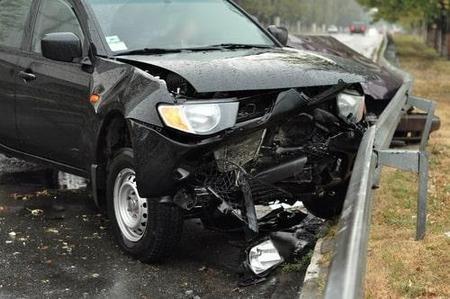 According to national statistics, approximately six million car accidents occur in this country each year. These accidents are responsible for more than three million injured victims, with two million of these victims left with permanent damage or disability.
While the circumstances of each crash may be different, there are common factors that show up in case after case. One of these factors is the cause. The following is a brief overview of some of the most common reasons why crashes occur. For more detailed information if you have sustained injuries in a car accident, call our office to speak with a Fort Collins personal injury attorney.
Common Causes of Car Accidents
When our firm represents a client in a car accident claim, one of the first things we determine is what was the cause of the crash. What type of negligent behavior was the other driver engaged in that resulted in our client’s injuries? The following are some of the top causes that we see in case after case:
CSP on Alert for Truckers Avoiding Weigh Stations
 The national statistics for deadly truck accidents are alarming. According to data from the Federal Motor Carrier Safety Administration (FMCSA), there are almost 500,000 truck crashes that occur each year in the United States, resulting in more than 4,000 deaths and almost 110,000 injured victims. The majority of those injuries range from serious to catastrophic.
In fatal truck accidents that involve a passenger vehicle and a semi, more than 95 percent of the victims who are killed are the occupants in the passenger vehicles. Truck accidents account for more than 10 percent of all fatal vehicle accidents each year.
Colorado State Patrol Set Up Mobile Check-Ins
These ever-increasing numbers of truck accidents have led the Colorado State Patrol (CSP) to be on the lookout for truckers who try to evade weigh stations that the state has set up to ensure that trucks that travel on Colorado roads are in good working order and are not over the weight limit. These check-ins also are an opportunity to make sure that truck drivers operating these massive vehicles are properly licensed and are adhering to federal regulations regarding hours of service that truckers are allowed to operate.
Long-Term Effects of Ladder Fall Injuries
 One of the essential tools on a construction site is a ladder, but it can also be one of the most dangerous. In fact, ladder falls are one of the leading causes of death for construction workers, with the majority of fatal falls occurring at 10 feet or less. In the past 10 years, the number of victims who have died from ladder falls has tripled. Ladder falls kill more than 300 people in the U.S. each year. Another 164,000 people end up at emergency rooms with injuries.
Victims often suffer serious physical injuries that can have long-lasting or permanent effects, but a recent study found that victims of ladder falls often deal with long-lasting emotional problems as well.
Ladder Fall Study
The study looked at victims who had suffered falls from ladders and were treated at two different hospitals. More than half of the victims were males, and some of the accidents had occurred while the victim was doing chores at their own home and not on a job site. The average hospital stay for these victims was five days. Some of the most common injuries these victims had suffered included:
Number of Distracted Driving Accidents Keep Rising Despite Warnings
 April is National Distracted Driving Awareness Month. According to national statistics, more than 700 people are injured every day in accidents caused by distracted drivers. More than 3,000 of those victims die every year, and despite all of the education and warnings about how dangerous engaging in distracted driving behaviors is, these numbers continue to increase each year.
In Colorado, distracted driving is responsible for more than 40 car accidents every day, resulting in thousands of injuries and death each year. The Colorado Department of Transportation (CDOT) is joining the nationwide campaign, announcing its own Distraction Reactions campaign.
Colorado Distracted Driving Statistics
While the COVID-19 pandemic forced many people to stay home and off the roads, vaccine rollouts are easing restrictions, meaning more drivers will be back on the roads. And, many of those drivers will be on their smartphones or doing some other activity that takes their focus off the road. In a 2020 survey conducted by the CDOT, 92 percent of drivers admitted to engaging in distracted driving. This was up by two percentage points from the 2019 survey.
Is Stem Cell Infusion Possible Treatment for Spinal Cord Injuries?

Spinal cord injuries are one of the most catastrophic injuries a victim can suffer, significantly impacting their quality of life. The spinal cord is the body’s message center, responsible for sending messages from the victim’s brain to other parts of the body. If there is an injury to the spinal cord, this can stop the messages from being delivered, causing great physical limitations for the victim. Up until recently, there have been limited treatment options for victims. There may be new hope, however, with early research finding that stem cell infusions may help victims regain lost sensation and movement.
The study was conducted by Yale School of Medicine in New Haven, Conn. The researchers took mesenchymal stem cells from the 13 study participants’ own bone marrow and multiplied them in the lab. The stem cells were then intravenously infused back into the participants at approximately 40 days after they had sustained their injuries.
How Dangerous Is Daylight Savings Time for Drivers?

It has been several weeks since we set our clocks one hour ahead for Daylight Savings Time (DST). While many Illinois residents are enjoying that extra hour of daylight each day, many may also have felt tired after the change due to the havoc “springing forward” does to the body’s internal clock. Multiple studies have shown that this fatigue is responsible for an increase in motor vehicle accidents for the first week or two after the change. One major study found that fatal crashes increased by almost 10 percent due to the loss of an hour’s sleep. According to one of that study’s co-authors, moving the clocks ahead causes people to go through a process similar to jet lag. While this fatigue is more severe the first couple of days following the change, some people are affected by it for up to two weeks.
Study: DST Transition More Dangerous Than Previously Thought
March Is Brain Injury Awareness Month

National statistics provided by the Centers for Disease Control and Prevention (CDC) show that traumatic brain injuries (TBI) have reached nearly epidemic proportions. According to the CDC, more than 50,000 people die every year from causes associated with TBI. Almost 2.2 million people are treated at emergency rooms for an injury to their brain, and approximately 280,000 people end up hospitalized because of serious TBI. Many of these injuries are the result of accidents caused by the negligence or recklessness of another party.
These statistics do not include people who develop a concussion from their head injuries but do not seek treatment, or, if they did see a medical professional, the TBI was a secondary diagnosis. If all those victims were included, then the CDC puts the number of people in this country who sustain brain injuries every year at over 3 million.
Will OSHA COVID-19 Employer Guidelines Soon Become Enforceable?

Shortly after taking office in January, President Joe Biden signed a series of executive orders that addressed COVID-19 worker protections. According to information provided on the Occupational Safety and Health Administration (OSHA) website, the protocols outlined in the executive orders are currently just guidelines; however, it is anticipated that these guidelines will soon become enforceable, thus affecting Colorado employers.
One of the directives given by President Biden to OSHA was to come up with the COVID-19 guidelines and another was to possibly implement emergency temporary standards to address the hazards that workers face in the workplace if needed. If these guidelines become standards, they will then be enforceable. The deadline set in the executive order to make these changes is March 15, 2021.

From our seven convenient office locations including Loveland, Greeley, and Longmont, we serve clients throughout the northern Colorado area, including Boulder County, Larimer County, Boulder, Windsor, Lafayette, Louisville, Wellington, Berthoud, Brighton, Estes Park, Johnstown, Timnath, Livermore, Norfolk, Nunn, Briggsdale, LaPorte, Glen Haven, Lyons, Evans, and Cheyenne, Wyoming.



Results listed are not a guarantee or indication of future case results.
1403 W. 29th St., Loveland, Colorado 80538
970-225-2190

