

Evidence to Prove Truck Accident Liability
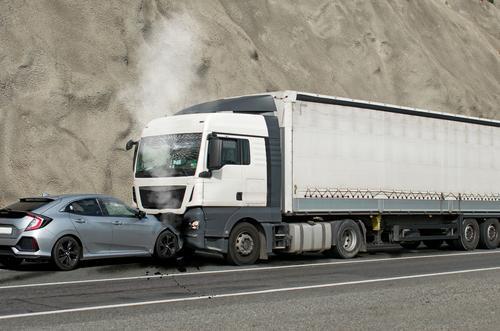 Large truck accidents are becoming more common, not less. According to the Federal Motor Carrier Safety Administration, fatal large truck crashes reached 15.8 per million people in 2022, a 50 percent increase from 2010, and the people hurt in those crashes often face an uphill battle getting fair compensation.
Truck accident cases are harder to prove than regular car accident cases. There are more parties involved, more rules to deal with, and more data to track down. Without the right documentation, a trucking company's insurer can challenge your version of events and reduce or deny what you are owed, even when fault seems clear. If you were hurt in a truck accident in 2026, a Fort Collins, CO truck accident attorney at Hoggatt Law Office, P.C. can help you identify, collect, and protect the evidence that supports your case.
What Does Proving Negligence in a Truck Accident Require?
Negligence means a person or company failed to act with reasonable care, and that failure hurt you. To prove a truck driver or trucking company was negligent, you need to show four things.
-
First, the truck driver had a legal duty to drive safely and follow the rules of the road.
-
Second, the driver or company violated that duty by doing something wrong or failing to act.
-
Third, that action or failure directly caused you harm.
-
Fourth, you suffered real losses because of it, such as medical bills, lost wages, or pain and suffering.
Each of these elements requires proof. The stronger your evidence, the better your chances of getting the compensation you deserve. Building your case with solid documentation from the very start makes a real difference in how your claim holds up.
What Types of Evidence Matter Most in a Truck Accident Case?
Truck accident cases involve several types of evidence. Each one can make or break your claim depending on what happened in your crash.
Physical Evidence
Physical evidence includes anything left at the scene. This means vehicle wreckage, skid marks, shredded tires, road debris, and broken glass. These items can help show how the crash happened and how hard the impact was.
Photos and Video Footage
Photos and video footage are some of the most useful evidence you can have. If you are able to do so safely, take photos of both vehicles, your injuries, road signs, and road conditions right after the crash. Dashcam footage, traffic cameras, and nearby security cameras can also show exactly what happened.
Electronic Logging Device Data
Electronic logging device data is key in most truck accident cases. Federal law requires many commercial truck drivers to use electronic logging devices, or ELDs, to track their hours, but the rule does not apply in every case. This data can show whether a driver was pushing past legal limits and was too tired to drive safely when the crash happened.
Onboard Vehicle Data
Newer safety system data is also becoming more important in these cases. Most modern commercial trucks record far more than just ELD data. They store automated emergency braking logs, lane departure warning records, forward-facing camera footage, and GPS route history. This information can show whether a driver was speeding, distracted, or failed to brake in time, even if no one witnessed the crash. Your attorney can request this data directly from the trucking company.
How Do You Prevent a Trucking Company From Destroying Key Evidence?
Many victims do not think about evidence preservation until it is too late, and by then, the most important records may already be gone.
Federal law only requires trucking companies to keep ELD records for six months under 49 C.F.R. § 395.8(k)(1). Other data, like camera footage and telematics records, may be deleted even sooner, depending on the company’s own policies. Once that time passes, the evidence may be gone for good. You cannot get it back.
One of the first things an attorney can do is send a litigation hold letter to the trucking company and its insurer. This letter is a formal legal demand to save all relevant evidence. That includes ELD data, driver logs, maintenance records, dispatch messages, and camera footage. If a trucking company deletes evidence after getting a litigation hold letter, that act, known as spoliation, can be held against them in court. A judge or jury may draw negative conclusions from the fact that the evidence was destroyed.
Colorado’s comparative fault law, found in C.R.S. § 13-21-111, also plays a role here. The strength of your evidence affects how much money you can recover. If a trucking company’s lawyer can point to missing records or gaps in the data, they may argue that you share some of the blame. That reduces what you can collect. Getting an attorney involved early keeps that from happening.
Acting fast after a truck crash gives your attorney the best chance of securing the records, data, and documentation needed to prove your case before they disappear.
Can You Still Sue After a Truck Accident if You Did Not Preserve Evidence at the Scene?
You may still have a case even if you did not take photos or preserve data right after your crash. An experienced personal injury attorney can investigate on your behalf, subpoena records, and work with accident reconstruction experts to rebuild what happened. The sooner you reach out, the more options you will have.
Schedule a Free Consultation with a Fort Collins, CO Truck Accident Attorney
If you or someone you love was seriously hurt in a truck crash in 2026, do not wait to find out what your case is worth. The attorneys at Hoggatt Law Office, P.C. have spent years fighting for injured people in Fort Collins and throughout Larimer County. Attorney Hoggatt is a member of the Colorado Trial Lawyers Association and the Workers' Compensation Education Association, and that commitment to the practice of law shows in every case the firm takes on.
We offer free consultations and will work hard to make sure no critical evidence slips through the cracks. Call 970-225-2190 today to speak with a dedicated Larimer County truck accident lawyer at the firm.

From our seven convenient office locations including Loveland, Greeley, and Longmont, we serve clients throughout the northern Colorado area, including Boulder County, Larimer County, Boulder, Windsor, Lafayette, Louisville, Wellington, Berthoud, Brighton, Estes Park, Johnstown, Timnath, Livermore, Norfolk, Nunn, Briggsdale, LaPorte, Glen Haven, Lyons, Evans, and Cheyenne, Wyoming.



Results listed are not a guarantee or indication of future case results.
1403 W. 29th St., Loveland, Colorado 80538
970-225-2190

