

Does Fort Collins Elevation Make Truckers’ Fatigue Worse?
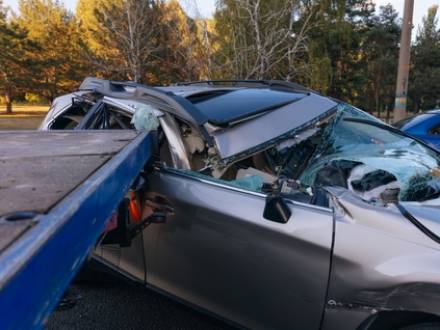 I-25 is a major trucking corridor through Fort Collins as part of the National Highway Freight Network, and the city's high elevation can make an already tiring drive even more dangerous for truckers passing through. When a drowsy driver is behind the wheel of an 80,000-pound truck, the results can be devastating. According to preliminary Federal Motor Carrier Safety Administration (FMCSA) crash data, large trucks were involved in 1,881 crashes statewide in 2025. Those crashes caused 63 deaths and 736 injuries. If a fatigued truck driver caused your accident in 2026, Fort Collins, CO, truck accident lawyers can review your case and explain your options.
How Does Fort Collins Elevation Affect Out-of-Town Truck Drivers?
Fort Collins sits at about 5,000 feet above sea level, which qualifies it as a high-altitude city. Long-term residents have adapted to this elevation. However, truckers coming from lower elevations may feel the effects of the altitude, especially if they are already tired or dehydrated. At higher altitudes, the air holds less oxygen, which affects how the body and brain work.
Increased fatigue is one of the most common symptoms of altitude sickness, along with lightheadedness, confusion, and sluggishness. These effects pile on top of the exhaustion truckers already carry after long hours on the road.
Even so, tight delivery schedules push truckers to keep driving even when they feel impaired. Some reach for coffee or energy drinks to push through, but too much caffeine may worsen dehydration and make some altitude symptoms feel worse.
How Does Fatigued Truck Driving Lead to Serious Accidents?
The Federal Motor Carrier Safety Administration sets strict hours-of-service rules for commercial truckers. These rules cap the length of a driver's shift and require mandatory rest breaks. The rules exist because fatigue creates risks similar to driving drunk or high.
A fatigued truck driver may experience:
-
Confusion and difficulty concentrating
-
Delayed reaction times
-
Poor motor coordination
-
Blurred vision
-
Poor judgment
-
Falling asleep at the wheel
In addition, elevation poses a risk not only for the driver but also for the truck itself. Thinner air can reduce engine power, and steep roads can make heavy trucks harder to control. Colorado winter weather adds another danger because wet or icy roads can greatly increase stopping distances.
How Can You Prove a Truck Driver's Fatigue Caused an Accident in Colorado?
A fatigue case relies on specific records that federal law requires trucking companies to keep. Since there is no roadside test for drowsiness, as there is for alcohol, the case relies on these records.
Federal rules require many carriers to use electronic logging devices (ELDs) and retain those records for six months. These logs track a driver's hours in real time. If a driver exceeded legal limits, those records will show it. Other important evidence includes:
-
GPS and dispatch data showing the driver's route and stop times
-
Weigh station inspection reports
-
Dashcam or onboard camera footage
-
Post-crash drug and alcohol testing results
-
The driver's employment record and prior violations
Trucking companies must make sure their drivers follow hours-of-service rules, and federal regulations hold the company responsible for how it hires and supervises those drivers in the first place. When a carrier knowingly sends out a driver with a history of fatigue violations, that hiring decision can support a separate claim against the company.
That same responsibility applies to scheduling. If a carrier pushes a driver past legal limits to meet a delivery window, the company can share in the blame for any crash that results.
Colorado follows a modified comparative negligence rule. Under Colorado Revised Statutes section 13-21-111, you can still recover damages even if you were partially at fault for the crash. As long as you were less at fault than the other driver, your claim is still valid, but your final award will be reduced by your share of the blame.
What Are Your Rights After a Colorado Truck Accident?
Under C.R.S. § 13-80-101, Colorado gives you three years from the date of a truck crash to file a lawsuit. This deadline covers most truck accident injury claims in the state. In some cases, such as those involving a government vehicle or an employee, the notice requirement is much shorter. An attorney can confirm which deadline applies to your case.
Truck accident claims also tend to involve bigger settlements than typical car crashes. Federal law requires most trucking companies to carry at least $750,000 in liability insurance per vehicle. Companies that haul hazardous materials must carry even more, sometimes up to $5,000,000. That coverage can pay for medical bills, lost wages, and pain and suffering after a crash.
If you were hurt in a truck accident, a few early steps can protect your claim. Get medical care right away, take photos of the vehicles and the scene, and avoid giving a recorded statement to any insurance adjuster until you have talked to an attorney.
Contact a Fort Collins, CO Truck Accident Attorney for a Free Consultation
High elevation, long hours, or another factor may have caused your crash. Whatever the cause, the lawyers at Hoggatt Law Office, P.C. are ready to investigate and fight for your compensation. Attorney Hoggatt is a member of the Colorado Trial Lawyers Association and the Workers' Compensation Education Association. Call 970-225-2190 to schedule your free consultation with a Larimer County, CO personal injury attorney.

From our seven convenient office locations including Loveland, Greeley, and Longmont, we serve clients throughout the northern Colorado area, including Boulder County, Larimer County, Boulder, Windsor, Lafayette, Louisville, Wellington, Berthoud, Brighton, Estes Park, Johnstown, Timnath, Livermore, Norfolk, Nunn, Briggsdale, LaPorte, Glen Haven, Lyons, Evans, and Cheyenne, Wyoming.



Results listed are not a guarantee or indication of future case results.
1403 W. 29th St., Loveland, Colorado 80538
970-225-2190

