

Understanding Colorado's Laws About Distracted Driving
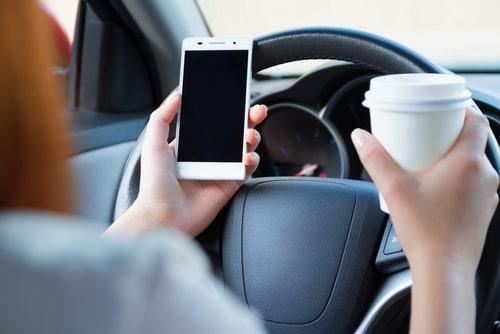 Distracted driving can take a driver's attention away from the road and lead to a serious accident. One of the most common ways that drivers are distracted is by the use of electronic devices while behind the wheel, which is addressed by Colorado law.
Distracted drivers can face tickets, fines, and points against their license, and a citation issued at the scene can support your injury claim. If you were injured by a distracted driver in 2026, a Fort Collins, CO distracted driving accident attorney can help you determine how the driver's actions affect your claim.
What Does Colorado Law Say About Using a Cell Phone While Driving?
Under C.R.S. § 42-4-239, Colorado drivers cannot use a mobile electronic device while driving unless they use it hands-free. This rule applies to drivers of all ages, although it does not apply to a commercial driver’s license holder who is operating a commercial vehicle.
The law covers most phone activities. A driver cannot hold or manually use a phone to make a call, send a message, browse the internet, or perform another task while operating a vehicle. However, an officer can issue a citation under this law only if the officer sees the device use cause the driver to operate the vehicle in a careless and imprudent manner.
Are There Exceptions to Colorado's Hands-Free Driving Law?
Colorado law allows drivers to use a mobile electronic device in several specific situations, including:
- Contacting a public safety entity
- Reporting an emergency
- Certain utility workers responding to an emergency
- First responders performing official duties
- Certain code enforcement or animal protection officers performing their duties
An emergency can include reporting a serious road hazard or an accident where someone appears to be injured. A driver can also report someone who is driving in a reckless or unsafe manner.
How Can Distracted Driving Affect a Colorado Car Accident Claim?
Distracted driving can help establish that the other driver was responsible for the accident. If a driver was looking at a phone instead of the road, for example, that conduct can show that they failed to drive with reasonable care.
The distraction must also have contributed to the collision. A driver who looks down at a text and fails to stop for traffic ahead could be responsible for a resulting rear-end accident. The injured person can then seek compensation for losses caused by the crash, such as medical expenses and lost income.
How Do You Prove the Other Driver Was Distracted for a Car Accident Claim?
Most distracted drivers will not admit what they were doing, so these claims are built from records rather than from what anyone says at the scene. Evidence that can be used to prove distracted driving includes:
- Phone company records showing calls, texts, and data use at the time of the crash
- App activity and social media timestamps
- Dashcam footage from your vehicle or another driver's
- Traffic cameras, business security systems, and doorbell cameras along the route
- Data stored in the vehicle, which can show whether the driver braked at all before impact
- Witnesses who saw the driver looking down
- The crash report and any citation the officer issued
An officer can only write a ticket under Colorado's hands-free law if the device use caused careless or imprudent driving, so many distracted drivers are never cited at all. You can still prove distracted driving in an injury claim even if the other driver did not receive a ticket.
What Can You Recover After a Distracted Driving Crash in Colorado?
Compensation after a distracted driving crash covers both the costs you can total up and the harm you cannot. That includes emergency care, hospital stays, surgery, ongoing treatment, and future medical needs. You may also be able to claim wages lost while you were out of work and reduced earning capacity if you cannot return to the same job. It also covers vehicle repair or replacement, pain and suffering, and the disruption the injuries caused in your daily life.
Colorado uses a modified comparative negligence rule, which affects what you actually receive. If you are found partly responsible, your recovery drops by your percentage of fault. If your share reaches 50 percent, you recover nothing. That rule is why insurance adjusters work so hard to assign you some portion of the blame, and why proving the other driver's distraction is worth the effort.
You also have a deadline. Colorado generally allows three years from the date of a motor vehicle crash to file a lawsuit, though claims against a government entity carry much shorter notice requirements.
Contact a Larimer County, CO Distracted Driving Accident Attorney
It only takes a moment of distraction for a driver to cause a serious collision. If you were injured in a crash involving a distracted driver, the lawyers at Hoggatt Law Office, P.C. can investigate what happened and help you pursue compensation for your injuries.
Contact a Fort Collins, CO car accident lawyer for a free consultation, or call 970-225-2190. Se habla español.

From our seven convenient office locations including Loveland, Greeley, and Longmont, we serve clients throughout the northern Colorado area, including Boulder County, Larimer County, Boulder, Windsor, Lafayette, Louisville, Wellington, Berthoud, Brighton, Estes Park, Johnstown, Timnath, Livermore, Norfolk, Nunn, Briggsdale, LaPorte, Glen Haven, Lyons, Evans, and Cheyenne, Wyoming.



Results listed are not a guarantee or indication of future case results.
1403 W. 29th St., Loveland, Colorado 80538
970-225-2190

